The Hayabusa is designed with a view to be the fastest accelerating bike on the planet with fantastic wind-cheating ability. Its standout, bulbous, lengthy style is instantly recognisable.
An oversized but shapely mudguard goes upwards into the headlight cluster. The indicators sit flush in the fairing, while the pair of smoothly rounded rearview mirrors work well at all speeds.
The bike comes with silver-outlined four-pod analogue instruments for the speedometer, tachometer, fuel gauge and temperature gauge. A centered LCD displays the bike’s odometre and twin trip readings as well as Suzuki’s Drive Mode Selector, which allows easy switching between three engine maps as can be operated on the fly. On offer are A mode for maximum performance, B for a relatively tame power curve, and C that subdues the Busa to make it as sedate as a Busa can possibly be. The Busa comes with beautifully sculpted, reach-adjustable, buffed alloy clutch and brake levers, comfortable grips and adequate switchgear bolted onto its clip-on bars. The tank area offers firm grip to the rider’s thighs, and the saddle is comfortably padded for both, rider and pillion.
The new Busa’s fuel tank is slightly lower than on the earlier model, while its visor sits 15mm higher, both combining to allow improved wind protection when a rider tucks in. An angular tail fairing section leads into its wide, easily distinguishable-at- night LED double lens taillight and oval turn indicators. Paint quality, fit and finish and overall quality are acceptable.
Yamaha’s R15 has been the embodiment of their “Racing Instinct” tag line. Technologies such as liquid cooling, a 4-valve head, a Deltabox frame, well tuned suspension and impressive rubber have made it a sublime race track focussed machine. In the real world, the R15 wasn’t as satisfying to use and lacked a bit of muscular appeal that riders expect from their sports bike. That, and keen competition has resulted in Yamaha upgrading the R15 to v2.0.
At first glance the R15 isn’t drastically different to look at, but extensive changes have been made. A new fairing design to improve aerodynamic efficiency, upsized tyres at the front and rear (a radial) and uprated discs are some of the new bits. There’s also a new longer aluminium swingarm, a new tail section, increased seat height for a sportier seating position and tweaked weight distribution. The ECU has been tweaked for better response, changed throttle mechanism for a more linear feel and revised final drive ratios round of the list of changes. We were taken to the MMST race track to experience the result of those changes.
A few laps astride the R15 v2.0 made it clear that Yamaha has managed to improve on the R15’s core strengths. On the dynamics front the new R15 is distinctly more stable, the longer wheelbase and bigger tyres make it very forgiving to ride hard. Although the r15 is still incredibly sharp and rewarding to ride hard around corners, it has lost some of the flickability of the earlier motorcycle. The engine felt more driveable than before too. It didn’t need to be wound all the way to the red line to get going.
So the R15 is easier to ride faster around corners, it is better when powering out of corners and very stable down the straights. While the difference may not be startling Yamaha has managed to improve the R15 discernibly in every area. And, while that is no small feat, more performance is needed to really spice things up. The R15 V2.0 is priced at Rs9,500 premium over the out going model. For an in depth report, watch out for the November issue of Autocar India.
The new Swift has finally arrived on Indian roads and we’ve just driven it. At first glance, it looks just like the earlier model but the changes are difficult to tell immediately. The fact is that this car is a grounds-up new generation of the Swift.
The new Swift is based on an all-new platform and is now both longer and wider. It gains 90mm in overall length and the wheelbase is 40mm longer. While overall width has increased by 5mm, height remains unchanged.
The benefits of the increased dimensions can be seen in the improved cabin space and the Swift now feels bigger inside, with more knee room for the rear passengers. This is aided, in part, by the indents in the back of the front seats. However, just like the old Swift, the rear still feels claustrophobic due to the small window area.
The Swift’s interior styling, which is heavily borrowed from its Kizashi sibling, is now plusher. The new instruments look superb and the steering-mounted controls feel good to operate. However, material quality hasn’t been improved substantially and the tiny boot space continues to disappoint.
The car is now sportier to drive and the 1.2 K-series petrol gets variable valve timing (VVT) to bump up power to 86bhp. The engine, which was a gem earlier, is simply brilliant now. It loves to be revved and refinement levels are a lot better than before. The addition of VVT has now rid the engine of the slightly weak bottom end. The torque curve is now much flatter and the power delivery more linear. The engine revs cleanly and is vibe-free all the way to the red line, sounding nice near the limit. Maruti says VVT on the 1.2 K-series engine has improved fuel efficiency by four percent and the Indian driving cycle economy figure is an impressive 18.6kpl.
The 1.3 diesel Multi-jet engine remains largely unchanged but the carmaker’s effort to make the cabin a quieter place is evident. The motor, which is still mated to a fixed geometry turbo and develops the same 74bhp, feels more refined than before. There is a bit of lag initially but once past that, it makes good progress. Surprisingly, the diesel has lost its strong mid-range and we found ourselves downshifting more often than we did before. Maruti informs us that the engines have been tuned more for efficiency, which has compromised their flexible nature to some extent but not so much that it would bother most Swift owners.
Ride and handling is substantially improved. Turn-in is sharp, there’s grip to spare and body roll is progressive enough. The ride quality is much improved in terms of bump absorption over big road undulations and the car feels less fidgety at highway speeds as well.
Suzuki has also reworked the steering and the new Swift gets a new variable-gear ratio design and low-play joints. The steering now feels a lot more positive around the centre position and a quicker ratio allows for sharper directional changes. However, it still lacks consistency. It is quick enough but becomes very light and disconnected for a moment after turn-in before it weights up.
Overall, the all-new Swift is lighter, longer and more spacious than before, delivering improved performance, driver dynamics and enhanced fuel economy. Suzuki has done well to iron out most of the flaws in the earlier Swift while retaining all the really good bits. That’s an extremely practical and effective way to ensure that the new Swift will start from where the old one left – right on the top of its class.
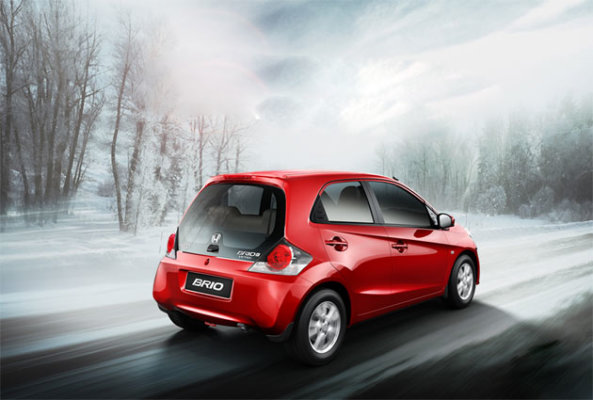
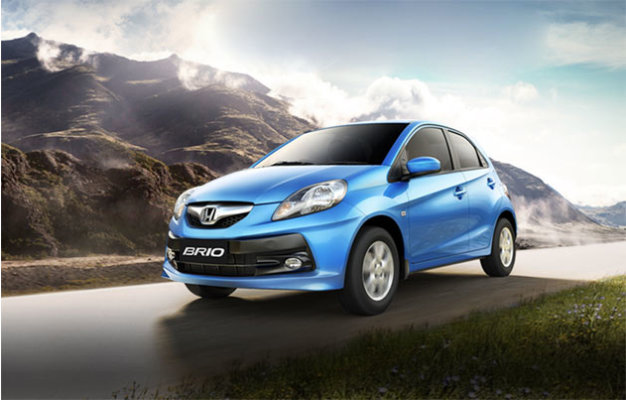
Honda today launched its entry level hatchback Brio India. Starting at a price of Rs.3.95 lakh, the Brio is available in four trims.
Honda Brio E - Rs 3.95 lakh
Honda Brio S - Rs 4.35 lakh
Honda Brio S Option - Rs 4.9 lakh
Honda Brio V - Rs 5.1 lakh
The Brio is powered by the same 1.2-litre i-VTEC engine that powers the Jazz. In the Brio, this engine delivers 88bhp of power and 109Nm of torque. The Brio S Option and V will get ABS, airbags and USB/aux-in audio system with steering mounted controls. The V also gets alloy wheels, fog lamps and a different seat trim.
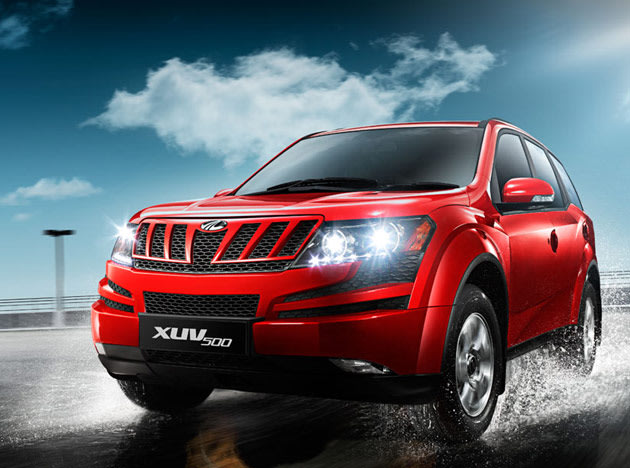
Mahindra has launched its new global sport utility vehicle XUV 500 at a staggering price of Rs 10.80 lakhs. The company will begin bookings from Saturday.
Mahindra has launched its new global sport utility vehicle XUV 500 at a staggering price of Rs 10.80 lakhs. The company will begin bookings from Saturday.
If the metal bodied scooters have fallen out of the consumers' choice, scooterettes have been climbing up the popularity charts lately. These set of two wheelers are a hit among people over the age group of 45, women and the young adults. These two wheelers are lighter which makes them easier to handle, they come with a digital ignition system to do away with the inconvenience of the kick start.
They also have smaller wheels for better balance and maneuverability. They cater to the load carrying and personal transport requirement of most urban two wheeler user.scooterettes and moped segment amount for a quarter of the two wheeler market share in India and about 8% of all the exports which takes place from the country. One company which has remained in the forefront of scooterettes and mopeds manufacturing in the country is TV Sundram Iyengar and Sons Limited (TVS), they were the first to launch an indigenous scooterettes in the Sub 100 cc category in the year 1984. Incidentally the company had also launched a two-seater 50 cc moped in the year 1980.
HondaMotorcycle and scooter India Limited
However it was not until the entry of HondaMotorcycle and scooter India Limited in the late 90s which revolutionized the un-geared scooter market in the country. The entry of HondaActiva brought about a much needed change in the scooterettes and moped market in the country though the latter can't strictly be included in this category. The market then had not seen any significant change for about 10 years till the time Hondahad come in with its' set of two wheelers.
Now most of the two wheeler companies like Bajaj Auto, Hondamotors, Kinetic motors have their presence in the scooterettes segment.
Mopeds were first manufactured in the country by automobile Products of India in the year 1955. Nearly three decades later the first indigenous two-seater moped was rolled out of the TVS factory in Hosur, Tamil Nadu. mopeds have also seen a downward trend in sales in the recent years. It's because the boys prefer motorcycles to mopeds and girls usually go for a scooterette rather that these metal bodied two-wheelers.
Mopeds are mainly used for commuting by the lower middle class; it is also used as utility vehicle in the rural areas. The looks hardly matter for these less than 100cc set of two wheels; it's the economy factor which comes to the forefront.
Here are the list of some moped manufacturers and their products.
Kinetic Motor
Kinetic V2 range which includes Kinetic V2 XL and Kinetic V2 80 Kinetic King 100 and Kinetic King Dlx Kinetic Luna Super Kinetic Luna TFR
TVS Motor
TVS XL which includes TVS XL Super and TVS XL Super Heavy Duty With the motorcycles becoming more fuel efficient with every passing day the moped might see a further dip in the sales in the days to come.


.jpg)