Showing posts with label rare diseases. Show all posts

Saturday, 1 October 2011

Haemophilia


Haemophilia is a group of hereditary genetic disorders that impair the body's ability to control blood clotting or coagulation, which is used to stop bleeding when a blood vessel is broken. Haemophilia A (clotting factor VIII deficiency) is the most common form of the disorder, present in about 1 in 5,000–10,000 male births. Haemophilia B (factor IX deficiency) occurs in around 1 in about 20,000–34,000 male births.
Like most recessive sex-linked, X chromosome disorders, haemophilia is more likely to occur in males than females. This is because females have two X chromosomes while males have only one, so the defective gene is guaranteed to manifest in any male who carries it. Because females have two X chromosomes and haemophilia is rare, the chance of a female having two defective copies of the gene is very low, so females are almost exclusively asymptomatic carriers of the disorder. Female carriers can inherit the defective gene from either their mother or father, or it may be a new mutation. Only under rare circumstances do females actually have haemophilia.

Haemophilia lowers blood plasma clotting factor levels of the coagulation factors needed for a normal clotting process. Thus when a blood vessel is injured, a temporary scab does form, but the missing coagulation factors prevent fibrin formation, which is necessary to maintain the blood clot. A haemophiliac does not bleed more intensely than a person without it, but can bleed for a much longer time. In severe haemophiliacs even a minor injury can result in blood loss lasting days or weeks, or even never healing completely. In areas such as the brain or inside joints, this can be fatal or permanently debilitating.


Signs and symptoms:


Characteristic symptoms vary with severity. In general symptoms are internal or external bleeding episodes, which are called "bleeds". Patients with more severe haemophilia suffer more severe and more frequent bleeds, while patients with mild haemophilia typically suffer more minor symptoms except after surgery or serious trauma. Moderate haemophiliacs have variable symptoms which manifest along a spectrum between severe and mild forms.
Prolonged bleeding and re-bleeding are the diagnostic symptoms of haemophilia. Internal bleeding is common in people with severe haemophilia and some individuals with moderate haemophilia. The most characteristic type of internal bleed is a joint bleed where blood enters into the joint spaces. This is most common with severe haemophiliacs and can occur spontaneously (without evident trauma). If not treated promptly, joint bleeds can lead to permanent joint damage and disfigurement. Bleeding into soft tissues such as muscles and subcutaneous tissues is less severe but can lead to damage and requires treatment.

Like most aspects of the disorder, life expectancy varies with severity and adequate treatment. People with severe haemophilia who don't receive adequate, modern treatment have greatly shortened lifespans and often do not reach maturity. Prior to the 1960s when effective treatment became available, average life expectancy was only 11 years. By the 1980s the life span of the average haemophiliac receiving appropriate treatment was 50–60 years. Today with appropriate treatment, males with haemophilia typically have a near normal quality of life with an average lifespan approximately 10 years shorter than an unaffected male.

Mesothelioma


Mesothelioma, more precisely malignant mesothelioma, is a rare form of cancer that develops from the protective lining that covers many of the body's internal organs, the mesothelium. It is usually caused by exposure to asbestos.
Its most common site is the pleura (outer lining of the lungs and internal chest wall), but it may also occur in the peritoneum (the lining of the abdominal cavity), the pericardium (a sac that surrounds the heart), or the tunica vaginalis (a sac that surrounds the testis).
Most people who develop mesothelioma have worked on jobs where they inhaled asbestos, or they have been exposed to asbestos dust and fiber in other ways. It has also been suggested that washing the clothes of a family member who worked with asbestos can put a person at risk for developing mesothelioma. Unlike lung cancer, there is no association between mesothelioma and smoking, but smoking greatly increases the risk of other asbestos-induced cancers.[4] Those who have been exposed to asbestos have collected damages for asbestos-related disease, including mesothelioma. Compensation via asbestos funds or lawsuits is an important issue in law practices regarding mesothelioma (see asbestos and the law).
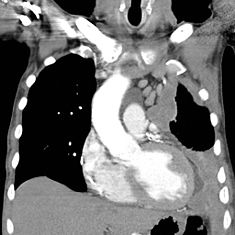
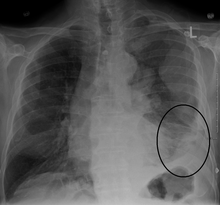
The symptoms of mesothelioma include shortness of breath due to pleural effusion (fluid between the lung and the chest wall) or chest wall pain, and general symptoms such as weight loss. The diagnosis may be suspected with chest X-ray and CT scan, and is confirmed with a biopsy (tissue sample) and microscopic examination. A thoracoscopy (inserting a tube with a camera into the chest) can be used to take biopsies. It allows the introduction of substances such as talc to obliterate the pleural space (called pleurodesis), which prevents more fluid from accumulating and pressing on the lung. Despite treatment with chemotherapy, radiation therapy or sometimes surgery, the disease carries a poor prognosis. Research about screening tests for the early detection of mesothelioma is ongoing.


Signs and symptoms

Symptoms or signs of mesothelioma may not appear until 20 to 50 years (or more) after exposure to asbestos. Shortness of breath, cough, and pain in the chest due to an accumulation of fluid in the pleural space (pleural effusion) are often symptoms of pleural mesothelioma.
Symptoms of peritoneal mesothelioma include weight loss and cachexia, abdominal swelling and pain due to ascites (a buildup of fluid in the abdominal cavity). Other symptoms of Peritoneal Mesothelioma may include bowel obstruction, blood clotting abnormalities, anemia, and fever. If the cancer has spread beyond the mesothelium to other parts of the body, symptoms may include pain, trouble swallowing, or swelling of the neck or face.
These symptoms may be caused by mesothelioma or by other, less serious conditions.
Mesothelioma that affects the pleura can cause these signs and symptoms:
Chest wall pain
Pleural effusion, or fluid surrounding the lung
Shortness of breath
Fatigue or anemia
Wheezing, hoarseness, or cough
Blood in the sputum (fluid) coughed up (hemoptysis)
In severe cases, the person may have many tumor masses. The individual may develop a pneumothorax, or collapse of the lung. The disease may metastasize, or spread, to other parts of the body.
Tumors that affect the abdominal cavity often do not cause symptoms until they are at a late stage. Symptoms include:
Abdominal pain
Ascites, or an abnormal buildup of fluid in the abdomen
A mass in the abdomen
Problems with bowel function
Weight loss
In severe cases of the disease, the following signs and symptoms may be present:
Blood clots in the veins, which may cause thrombophlebitis
Disseminated intravascular coagulation, a disorder causing severe bleeding in many body organs
Jaundice, or yellowing of the eyes and skin
Low blood sugar level
Pleural effusion
Pulmonary emboli, or blood clots in the arteries of the lungs
Severe ascites
A mesothelioma does not usually spread to the bone, brain, or adrenal glands. Pleural tumors are usually found only on one side of the lungs.


Cause:

  1. Working with asbestos is the major risk factor for mesothelioma.
  2. Exposure to asbestos fibers has been recognized as an occupational health hazard since the early 20th century. Numerous epidemiological studies have associated occupational exposure to asbestos with the development of pleural plaques, diffuse pleural thickening, asbestosis, carcinoma of the lung and larynx, gastrointestinal tumors, and diffuse malignant mesothelioma of the pleura and peritoneum. Asbestos has been widely used in many industrial products, including cement, brake linings, gaskets, roof shingles, flooring products, textiles, and insulation.
  3. Family members and others living with asbestos workers have an increased risk of developing mesothelioma, and possibly other asbestos related diseases.This risk may be the result of exposure to asbestos dust brought home on the clothing and hair of asbestos workers. To reduce the chance of exposing family members to asbestos fibres, asbestos workers are usually required to shower and change their clothing before leaving the workplace.
  4. Many building materials used in both public and domestic premises prior to the banning of asbestos may contain asbestos.

Diagnosis:


Diagnosing mesothelioma is often difficult, because the symptoms are similar to those of a number of other conditions. Diagnosis begins with a review of the patient's medical history. A history of exposure to asbestos may increase clinical suspicion for mesothelioma. A physical examination is performed, followed by chest X-ray and often lung function tests. The X-ray may reveal pleural thickening commonly seen after asbestos exposure and increases suspicion of mesothelioma. A CT (or CAT) scan or an MRI is usually performed. If a large amount of fluid is present, abnormal cells may be detected by cytopathology if this fluid is aspirated with a syringe. For pleural fluid, this is done by thoracentesis or tube thoracostomy (chest tube); for ascites, with paracentesis or ascitic drain; and for pericardial[disambiguation needed] effusion with pericardiocentesis. While absence of malignant cells on cytology does not completely exclude mesothelioma, it makes it much more unlikely, especially if an alternative diagnosis can be made (e.g. tuberculosis, heart failure). Unfortunately, the diagnosis of malignant mesothelioma by cytology alone is difficult, even with expert pathologists.
Generally, a biopsy is needed to confirm a diagnosis of malignant mesothelioma. A doctor removes a sample of tissue for examination under a microscope by a pathologist. A biopsy may be done in different ways, depending on where the abnormal area is located. If the cancer is in the chest, the doctor may perform a thoracoscopy. In this procedure, the doctor makes a small cut through the chest wall and puts a thin, lighted tube called a thoracoscope into the chest between two ribs. Thoracoscopy allows the doctor to look inside the chest and obtain tissue samples. Alternatively, the chest surgeon might directly open the chest (thoracotomy). If the cancer is in the abdomen, the doctor may perform a laparoscopy. To obtain tissue for examination, the doctor makes a small incision in the abdomen and inserts a special instrument into the abdominal cavity. If these procedures do not yield enough tissue, more extensive diagnostic surgery may be necessary.
Immunohistochemical studies play an important role for the pathologist in differentiating malignant mesothelioma from neoplastic mimics. There are numerous tests and panels available. No single test is perfect for distinguishing mesothelioma from carcinoma or even benign versus malignant.

treatment includes surgery , chemotherapy, radiation , immunotherapy ,multimodality therapy.

Friday, 1 July 2011

smoking kills


Why quit smoking?

Most people know that smoking can cause lung cancer, but it can also cause many other cancers and illnesses.
Smoking kills around 114,000 people in the UK each year.
Of these deaths, about 42,800 are from smoking-related cancers, 30,600 from cardiovascular disease and 29,100 die slowly from emphysemaand other chronic lung diseases.

How do cigarettes damage health?

Cigarettes contain more than 4000 chemical compounds and at least 400 toxic substances.
When you inhale, a cigarette burns at 700°C at the tip and around 60°C in the core. This heat breaks down the tobacco to produce various toxins.
As a cigarette burns, the residues are concentrated towards the butt.
The products that are most damaging are:
  • tar, a carcinogen (substance that causes cancer)
  • nicotine is addictive and increases cholesterol levels in your body
  • carbon monoxide reduces oxygen in the body
  • components of the gas and particulate phases cause chronic obstructive pulmonary disorder (COPD).
The damage caused by smoking is influenced by:
  • the number of cigarettes smoked
  • whether the cigarette has a filter
  • how the tobacco has been prepared.

Major diseases caused by smoking

Cardiovascular disease

Cardiovascular disease is the main cause of death due to smoking.
Hardening of the arteries is a process that develops over years, when cholesterol and other fats deposit in the arteries, leaving them narrow, blocked or rigid. When the arteries narrow , blood clots are likely to form.
Smoking accelerates the hardening and narrowing process in your arteries: it starts earlier and blood clots are two to four times more likely.
Cardiovasular disease can take many forms depending on which blood vessels are involved, and all of them are more common in people who smoke.
  • Coronary thrombosis: a blood clot in the arteries supplying the heart, which can lead to a heart attack. Around 30 per cent are caused by smoking.
  • Cerebral thrombosis: the vessels to the brain can become blocked, which can lead to collapsestroke andparalysis.
  • If the kidney arteries are affected, then high blood pressure or kidney failure results.
  • Blockage to the vascular supply to the legs may lead to gangrene andamputation.
Smokers tend to develop coronary thrombosis 10 years earlier than non-smokers, and make up 9 out of 10 heart bypass patients.

Cancer

Smokers are more likely to get cancer than non-smokers. This is particularly true of lung cancer, throat cancer and mouth cancer, which hardly ever affect non-smokers.
The link between smoking and lung cancer is clear.
  • Ninety percent of lung cancer cases are due to smoking.
  • If no-one smoked, lung cancer would be a rare diagnosis - only 0.5 per cent of people who've never touched a cigarette develop lung cancer.
  • One in ten moderate smokers and almost one in five heavy smokers (more than 15 cigarettes a day) will die of lung cancer.
The more cigarettes you smoke in a day, and the longer you've smoked, the higher your risk of lung cancer. Similarly, the risk rises the deeper you inhale and the earlier in life you started smoking.
For ex-smokers, it takes approximately 15 years before the risk of lung cancer drops to the same as that of a non-smoker.
If you smoke, the risk of contracting mouth cancer is four times higher than for a non-smoker. Cancer can start in many areas of the mouth, with the most common being on or underneath the tongue, or on the lips.


Alternative Therapies

It is necessary to control your thirst for smoking and keeping yourself relaxed during the process of quitting smoking. Alternative therapies are used to take care of the withdrawal symptoms, and thus eventually you will quit smoking at the end. Meditation, Acupuncture, and Aromatherapy are the famous therapies used to solve withdrawal symptoms.

Counselling

Counselling is usually conducted to boost your will power and give you motivation on what you are trying to do, help you in finding the ways to quit smoking. Counselling might be one on one or group counselling based on your interest and comfort. Many Charitable like Christian rehab, Government, and Private Companies offer such counselling services on smoking, drug rehab and alcohol rehabilitation.Counselling does not stop the smoking habit abruptly but they work on the slowdown of chain smoking of electronic cigarette smoking, normal leave smoking and other such forms into mini e-cig and then cuts off the cravings for cig.


Hypnotherapy

The alternative successful way after smoking aids is hypnotherapy to help quitting smoke. As per all the reports, hypnotherapy is the effective way to help reduce the hunger for cigars. Hypnotherapy deals with eliminating the thoughts about the bad habit completely from the subconscious source of mind and thus you will eventually stop smoking.

Prescription Only Medicine

The medicines that you get from your doctor that helps quit smoking are called prescriptions. You will have to get appointments, make frequent visits, talk about your requirements to your doctor and collect the required medicines. Medicines like herbs are found to effective remedies in quitting fags.

Stop Smoking Aids

There are certain smoking aids like gum, nasal sprays, lozenges, inhalers and nicotine patches that would help you to lessen your hunger or thirst for nicotine. For instance: consider nicotine patch are made to release minute amount of medically approved nicotine on to your bloodstream and thus easing out the nicotine thirst, without having to intake the poisonous gases and harmful tars normally released from cigars. This is one of the simpler way to aid you quit smoking.

Willpower

The state of mind is often referred to as will power and it is always easy to say rather than doing it. By taking an oath to stop smoking you will be taking the first step in giving up smoking. It is necessary that you have faith on yourself and travel along the right path to stop smoking. Will power and Determination is necessary for you to reach the final stage of quit smoking.